
A Market of Wide Choice and High Risk
The permanent makeup device market offers hundreds, if not thousands, of models priced from around €100 to several thousand euros. The sheer number of offers doesn't make the decision easier — without understanding what actually differentiates the constructions, price becomes the only selection criterion. That's the wrong criterion: the price of a PMU device isn't the price of a brand, but the result of specific engineering decisions — unless a brand deliberately inflates the price by exploiting the customer's lack of technical knowledge.
What Determines the Price of a Device
The price of a PMU device is made up of six factors: component quality, production precision, quality control, safety testing, the scope of the manufacturer's technical support, and thoughtful construction — designed from the ground up, not copied and dropped into a different housing. Of these, thoughtful construction is the decisive factor: it determines whether the remaining five even have a chance to work together as a coherent system, rather than a collection of randomly matched parts. On top of that comes the design approach itself — whether the device was built with the artist's work in mind, or primarily to cut production cost.
The real problem in the PMU market is quantity outweighing quality: the market is flooded with mass-replicated devices, and the average customer — without the technical knowledge to assess the construction — can't tell a thoughtfully engineered product from a copy dropped into a different housing.
A significant share of devices on the market today are produced without real user testing, without analysis of artists' actual needs, and on the basis of low-quality components. On paper, the specifications can look promising; in practice, on the skin, they fail — the specifications listed in a product description often don't match the actual construction and performance of the machine.
Where the Problem Starts in Cheap Devices
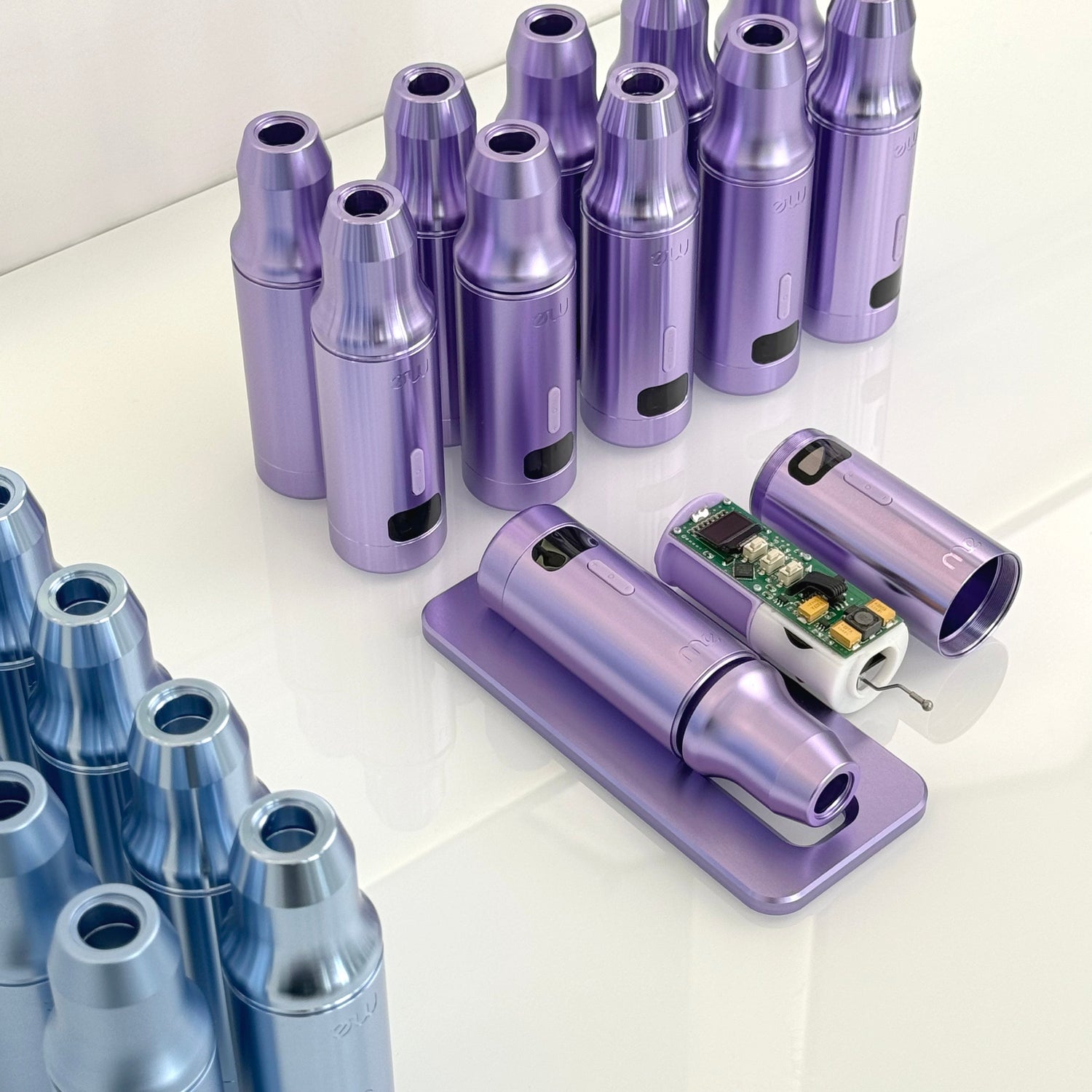
A PMU machine is a closed system: mechanics, electronics, motor, bearings, the eccentric–follower assembly, and software all have to work in strict interdependence. A mistake in choosing any single component affects the whole system.
The tolerances these components operate within are measured in microns — the parameters of individual parts have to be correlated with each other to that same degree of precision. A deviation in a single parameter, or an inaccuracy at the assembly stage, is enough to stop the whole system from working correctly.
The most common design mistake is pairing a weak DC motor with a mismatched stroke geometry or drive mechanism. The result is what's known as an empty stroke: a movement that looks correct in theory but fails to transfer energy effectively into the needle during work on the skin.
The consequences of this kind of mismatch are measurable:
- uneven pigment implantation,
- unstable needle pressure,
- increased skin irritation,
- louder operation and excessive vibration,
- shortened device lifespan.
The absence of CE/UKCA certification, along with limited or nonexistent technical support, further increases the risk of a poor investment.
Conclusion: a PMU device has to be evaluated as a system, not as a sum of individual parameters in a product description.
The ME Approach
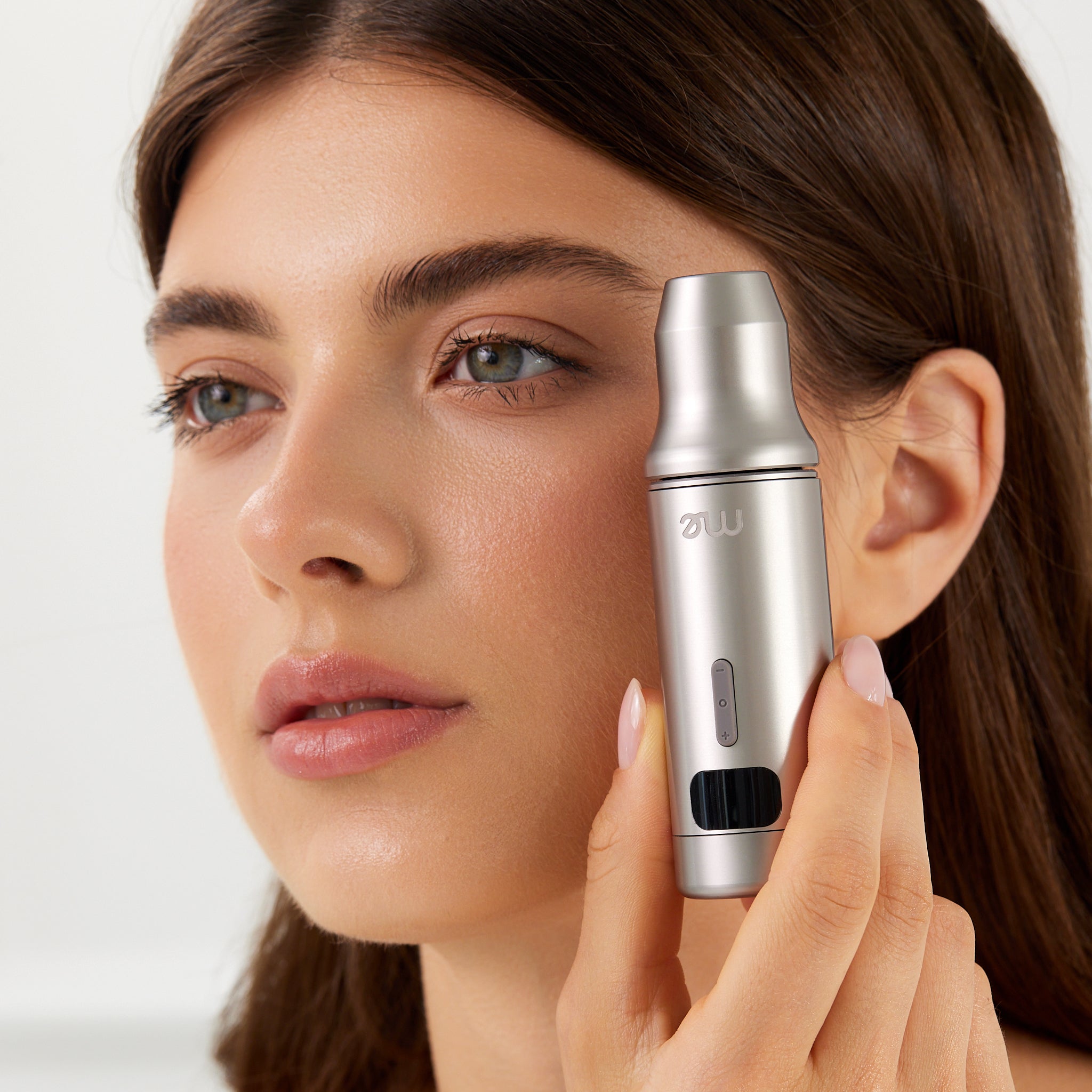
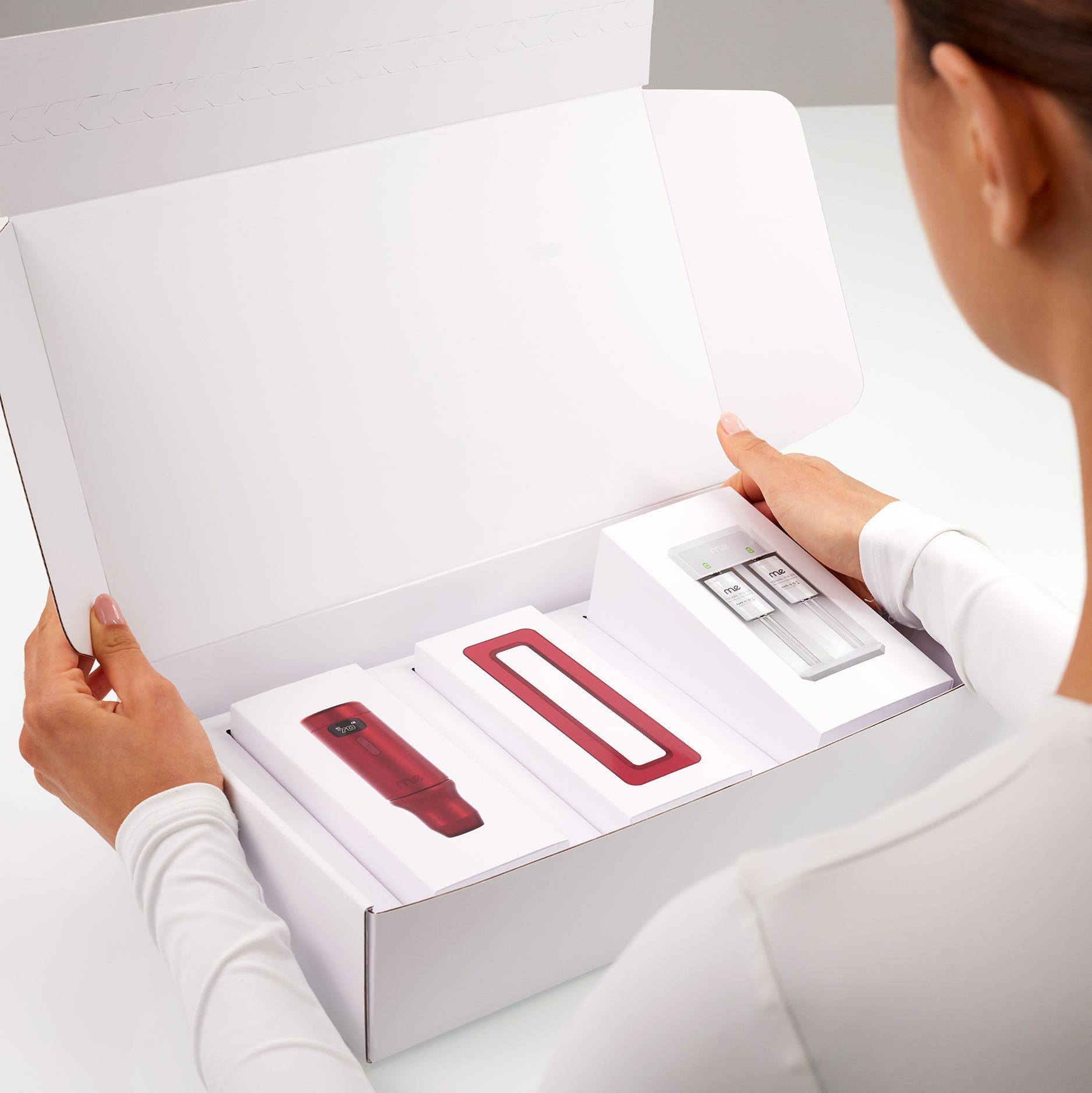
At ME, we didn't set out to build another PMU device for the market — we set out to build a tool designed around the artist's work. We were looking for a solution to problems artists have faced during pigmentation for years — problems nobody in the industry had solved before, even as the market kept filling up with mediocre-quality devices. It took four years. The design process started with understanding the entire operating mechanism — how each element affects the others, how energy flows through the system, and how every parameter translates into the final, healed result in the skin.
ME specification:
- a dedicated brushless motor, designed specifically for this model, delivering constant torque and stable performance,
- a precisely engineered eccentric–follower assembly, converting the motor's rotary motion into a stable, repeatable reciprocating motion of the needle,
- the Motion Control system, operating within two mechanical strokes — 2.8 mm and 3.5 mm — with four needle-behaviour profiles: Lips, Hairstroke, Powder, and Satin,
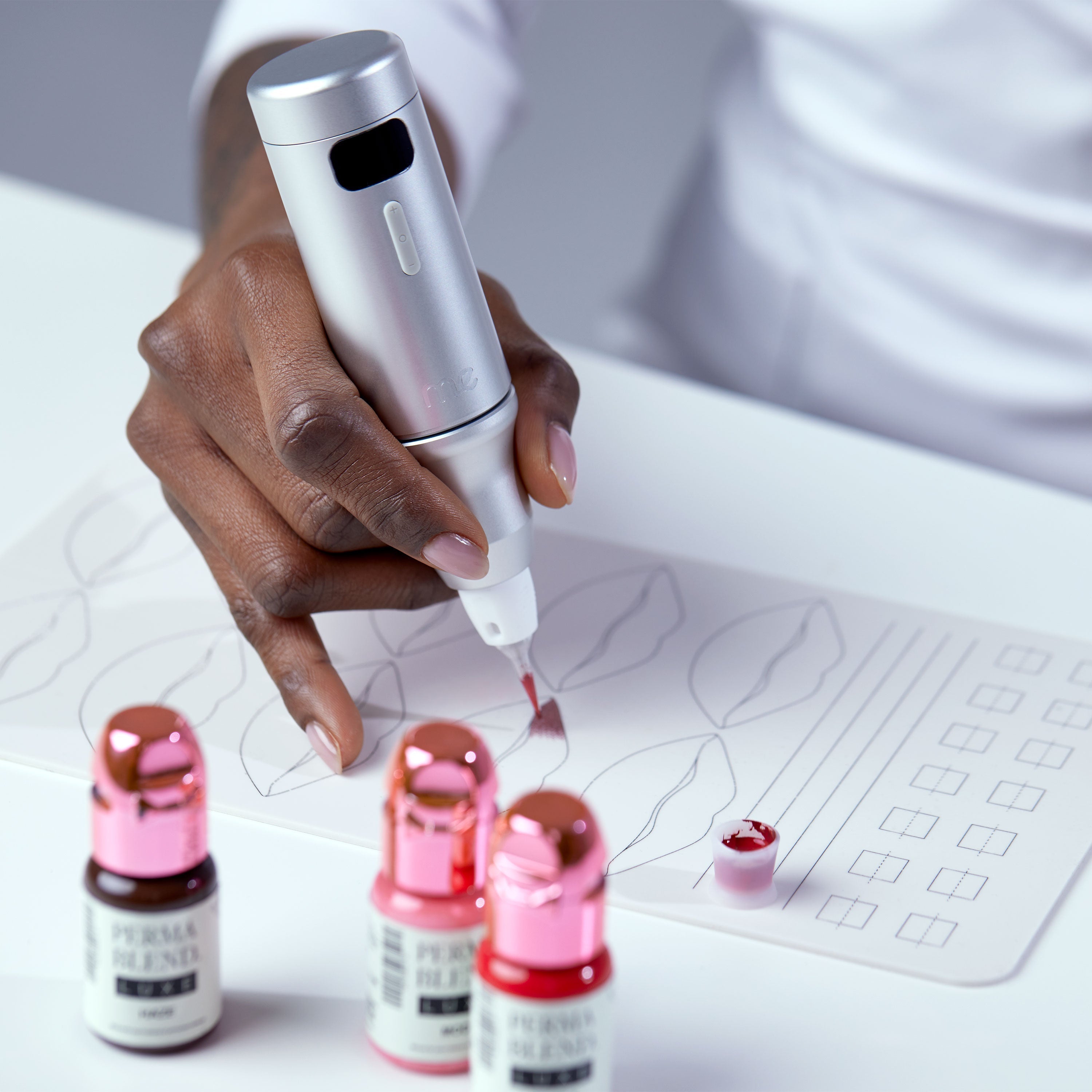
- a high-grade aluminum body,
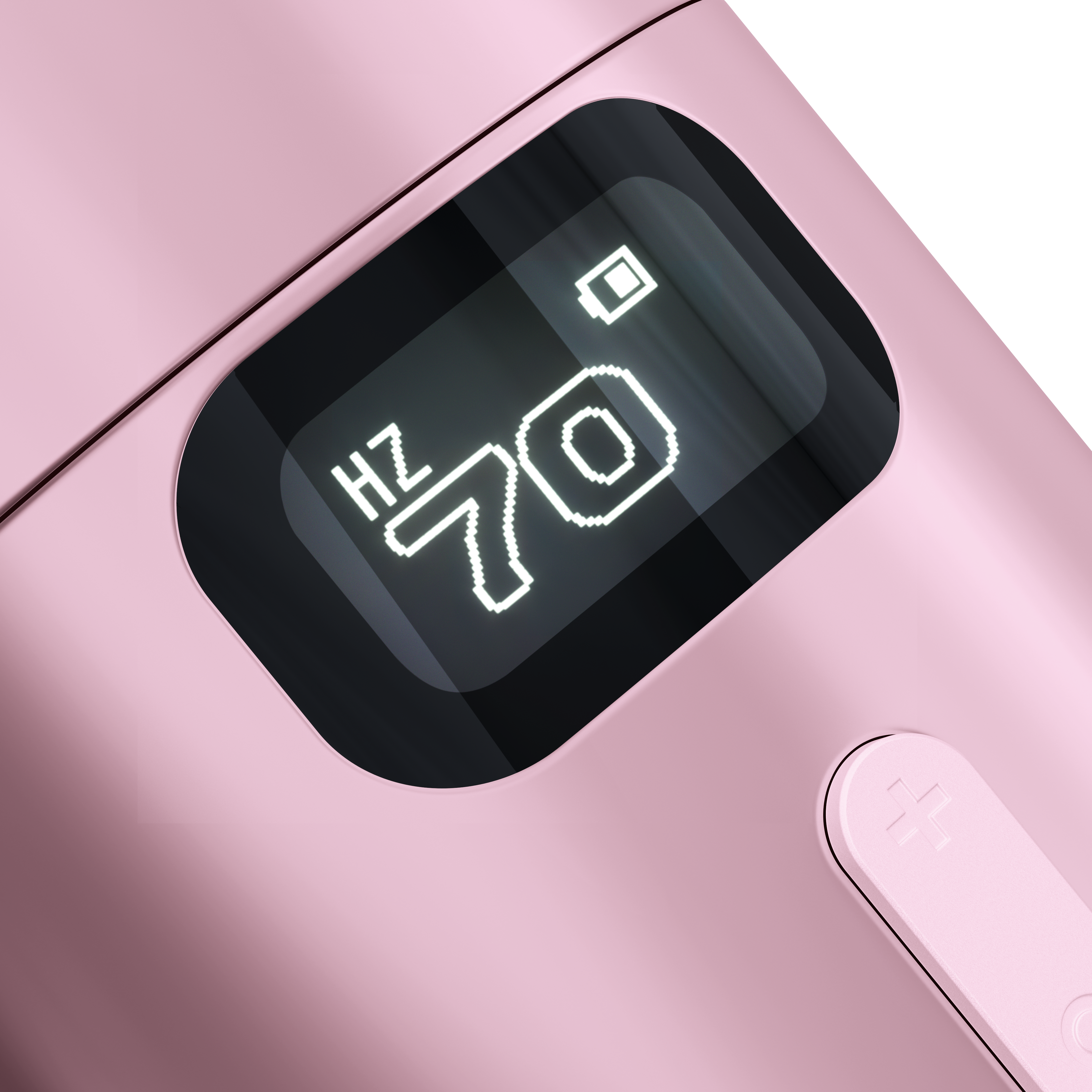
- a minimalist OLED display, showing only speed, battery level, and pause status,
- CE and UKCA certification, confirming compliance with applicable quality and safety standards.
Motion Control doesn't change the stroke length — it changes the dynamics of the needle's movement within the same mechanical stroke. Each of the four profiles is engineered around a different implantation objective, from soft diffusion and controlled pigment saturation to a more direct, defined needle movement. Same mechanical stroke. Different dynamic behaviour. Different purpose.
A product description can promise anything — it isn't the measure of quality. The real measure is the work of the artists who use the device every day. That's why every unit goes through a rigorous process of measurement, assembly, and quality control, and every component — from selection to how it's seated within the assembly — is individually engineered, not copied from another design.
Conclusion for an Informed Purchase Decision
Price matters, but choosing a PMU device on price alone overlooks what actually determines the quality of the work: the selection and mutual fit of components, production quality control, and real technical support from the manufacturer. Evaluating a device as a system — rather than a set of separate parameters — makes it possible to tell a construction designed around the artist's work apart from a product built purely around a low price.

Leave a comment
All comments are moderated before being published.
This site is protected by hCaptcha and the hCaptcha Privacy Policy and Terms of Service apply.