
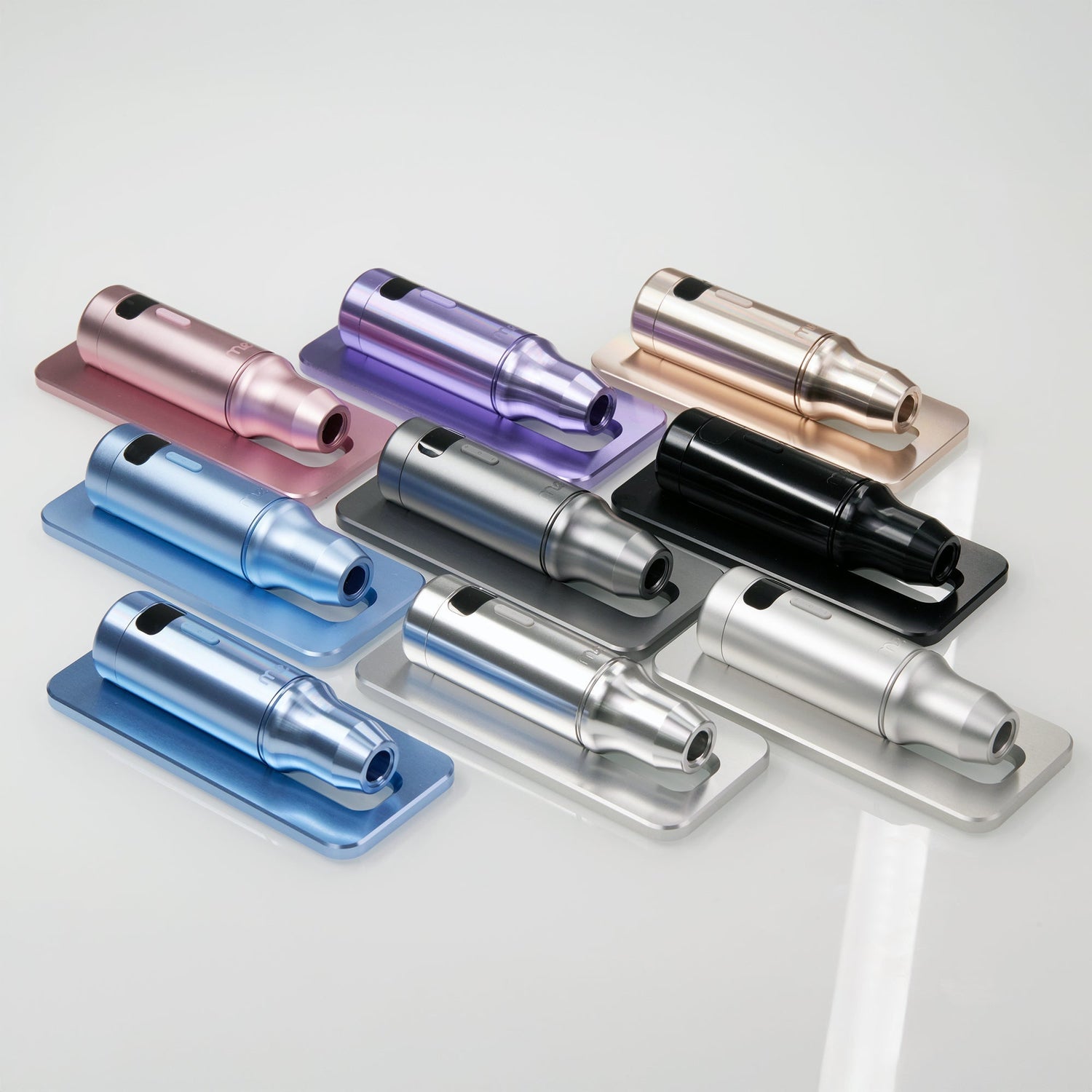
This is probably one of the questions we hear most often. Which machine is best to start with? Our answer is always the same. It depends on what you do most often and what kind of machine feel you enjoy working with. There isn't one configuration that is perfect for every artist — and that's exactly why we created the ME™ system.
Start with one simple question
Before you compare different configurations, ask yourself one very simple question:
What procedure do I perform most often?
If you spend most of your day performing lip pigmentation, your needs will be completely different from someone who mainly creates ombre brows. If Hairstroke is your specialty, you'll also expect something entirely different from your machine.
That's why we created different configurations with different working characteristics.
Every Motion Control™ profile was engineered around a specific challenge, technique or desired result. Pixel structure, tissue response and the way the machine feels in your hand were all part of the engineering process. Because both the result you want to create and your sensorial preference matter.
If lips are your main treatment
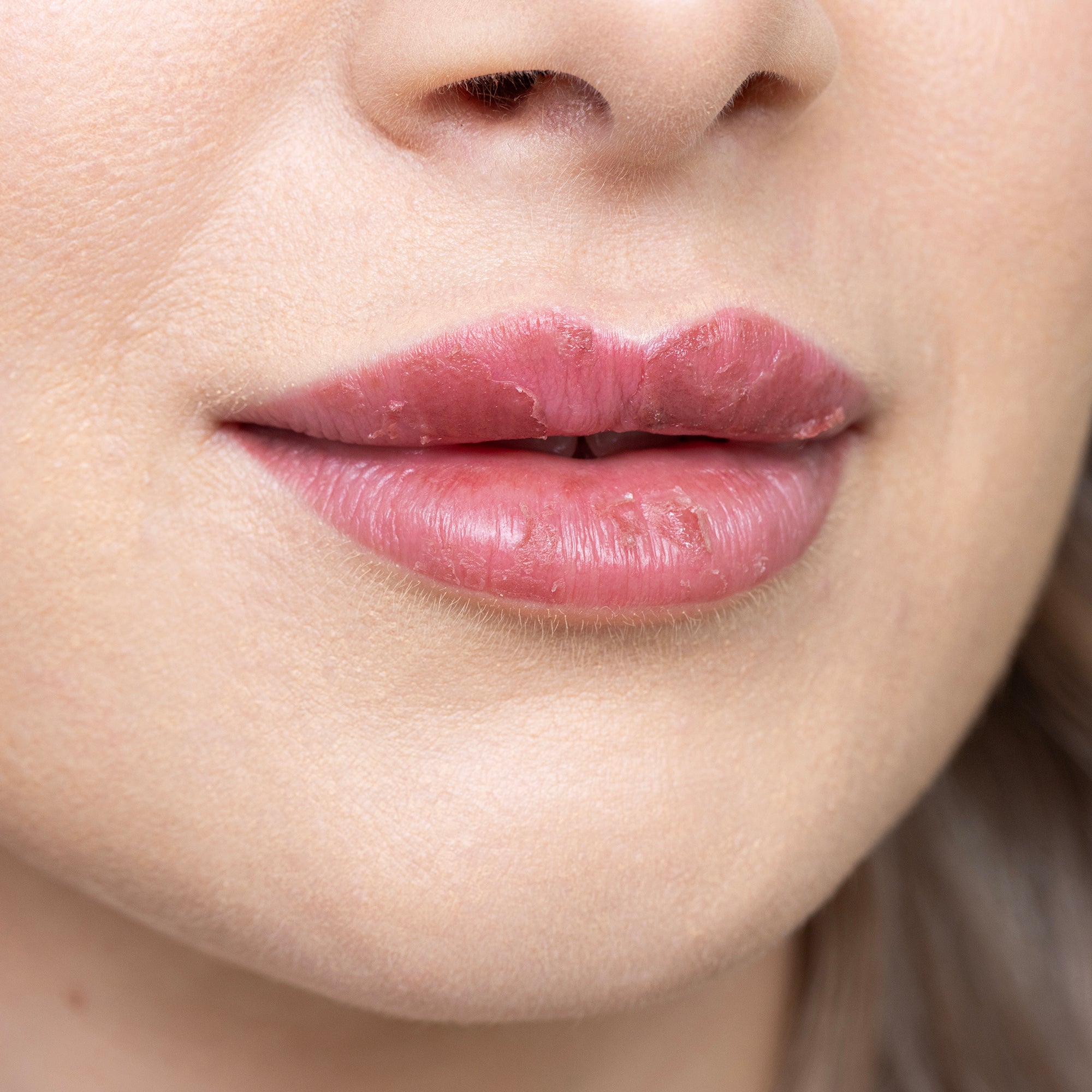
If lips make up the majority of your work, but you also perform brows, I would choose ME™ 2.8 mm Lips Motion Control™.
This is not a machine exclusively for lips. It is a configuration developed around the biomechanics of lip tissue. We analysed how lips respond to pigment implantation, how they absorb energy during the procedure, and how to create a working characteristic that allows artists to work lightly, with controlled tissue interaction and without tissue swelling.
The same working characteristic performs exceptionally well during eyebrow pigmentation too — especially on thin, mature, normal or delicate skin, as well as when working with hybrid pigments, tattoo pigments and formulations with a higher colorant concentration or stronger binders.
If I had to choose only one cartridge to pair with this configuration, it would definitely be Type B. The cartridge matters because the way the needles are soldered and their resulting flexibility influence both the sensorial feel in your hand and what happens in the skin. A more flexible or more rigid needle configuration can further soften or sharpen the character of the impulse and change the way energy is transferred into the tissue — and, in turn, how you see the dot and how your pigmentation looks.
That is why cartridge selection should also reflect the additional characteristic you want to create. For me, Type B is the absolute must-have with Lips Motion™.
When I want an even softer, more satin-like finish, I switch to Type A. Keep in mind that a more flexible needle generally transfers less energy into the tissue and produces a finer, softer pixel.
Lips Motion™ combines a dynamic, controlled impulse with a soft yet direct hit. It does not feel stiff in the hand. Instead, you feel a measured softness with efficient energy transfer into the tissue.
As with every ME™ configuration, work with the tip of the needle and avoid unnecessary pressure. Motion Control™ is designed to respond to resistance rather than encourage forceful implantation. As tissue resistance changes, the system adjusts the energy required to maintain the intended movement — less where resistance is lower, more where resistance is higher. The objective is to maintain the designed movement and a consistent implantation pattern regardless of the tissue, without requiring the artist to compensate with additional pressure.
If brows are your main focus
If eyebrows are the majority of your daily work and you only perform lips occasionally, I would choose ME™ 3.5 mm Powder Motion Control.
This is the most versatile configuration in the entire ME™ family. Not because it "does everything best." But because it offers the broadest range of applications and its results are universal. During work, it doesn't feel too direct or too soft — it's a balanced characteristic that performs well on any skin type and with any technique.
Due to its longer stroke (3.5 mm), the needle has a longer contact time with the skin, but this does not mean a higher risk of overpigmentation. This is a common belief that turns out to be a myth that doesn't hold true for ME machines — because of the way Motion Control™ controls the delivered energy, a longer stroke on its own does not translate into excessive pigment implantation.
If you love a satin finish
If for years you've been searching for a way to achieve that soft, diffused finish — where the powder looks like a fine mist rather than being built from visible pixels, where the brow looks almost as if it has been dusted with shadow rather than built from visible dots — Satin Motion Control™ is a must.
The pixels are extremely fine and closely spaced, blending visually into one another to create a soft mist of colour. Instead of clearly defined individual dots, you build delicate layers that gradually create coverage, density and gradient while maintaining that characteristic diffused finish.
It is a more demanding configuration. The work is more layered and requires patience and greater control, but it rewards the artist with an exceptionally soft result and an equally beautiful healed outcome.
On oily or more resistant skin, I would usually reach for Powder Motion Control™ first. Satin can absolutely do the job too, but because of its finer, softer implantation characteristic, building sufficient density may require more layering, more time and, importantly, the right needle configuration.
A needle that is too soft or too flexible may not transfer enough energy efficiently in more resistant tissue. The more flexible the needle, the more it absorbs and softens the impulse; the more rigid the needle, the more directly that energy is transferred into the skin. So your cartridge choice should always complement both the Motion Control™ profile and the tissue you are working on.
If Hairstroke is your specialty
If you mainly perform Hairstroke brows, the best choice is ME™ 2.8 mm or 3.5 mm Hairstroke Motion Control.
This is the most dynamic configuration in the ME™ family.
It was developed for artists who prefer a firmer, more direct machine response and maximum precision during techniques requiring crisp, well-defined implantation. Hairstroke, in both stroke lengths, allows you to achieve hyper-realistic hair strokes. Until recently, microblading was what gave us the ability to create a line as fine as a single hair — with Hairstroke ME Motion Control, that decisively changes.
Every configuration can perform every procedure
Lips Motion Control does not mean the machine is only for lips.
Powder Motion Control does not mean it is only for brows.
Every configuration can be used for virtually every PMU procedure.
The names are not limitations.
They simply indicate which technique, challenge or desired result that particular working characteristic was originally designed around.
Instead of asking:
"What procedures can I do with this machine?"
Ask yourself:
"What do I perform most often?" "How do I like my machine to feel?" "What result, what pixel do I want to see in the skin?"
That's the best place to start.
Think about the type of machine feel you enjoy
Very few artists ask themselves this question.
In my opinion, it is just as important as choosing the stroke.
Some artists prefer machines that feel softer. Others feel much more comfortable with machines that are firmer, more dynamic and more direct.
It simply comes down to personal preference.
This is exactly why we developed different Motion Control characteristics.
If you're not yet familiar with the differences between them, we encourage you to visit the Motion Control Technology section.
There you'll find a detailed explanation of why we created this system, how each Motion Control characteristic differs and why we chose not to rely on stroke length alone.
Only after understanding how Motion Control works can you truly appreciate why two configurations with exactly the same stroke can feel completely different in the hand and produce a different style of pigment implantation.
If I were building my own setup from scratch today...
This is another question I get asked all the time.
Where would I start?
My two absolute must-haves would be:
ME™ 2.8 mm Lips Motion Control
ME™ 3.5 mm Powder Motion Control
Those would be the first two configurations in my collection.
My next choice would be ME™ 3.5 mm Satin Motion Control.
I love creating exceptionally soft, satin-like pigmentations, and this configuration gives me the greatest possibilities for that style of work.
After that, I would add ME™ 2.8 mm Powder Motion Control, which combines the shorter stroke with the Powder Motion Control characteristic.
Finally, I would complete my collection with ME™ 3.5 mm Hairstroke Motion Control.
Not because it is less important.
Simply because, in my daily work, I perform far more lips, ombré brows and powder brows than Hairstroke procedures.
If Hairstroke were my primary service, my order of choice would look completely different.
One configuration is only the beginning
I truly believe that no matter which configuration you choose first, sooner or later you'll want to add another one.
Not because the first machine won't be enough, but because you'll begin to understand just how much different Motion Control characteristics influence your working experience and the way pigment is implanted into the skin.
At some point, you stop asking:
"Which machine is the best?"
Instead, you start asking a much more interesting question:
"Which configuration is best for this skin, this technique and the result I want to achieve?"
And that's when working with the ME™ system becomes truly intentional.

Leave a comment
All comments are moderated before being published.
This site is protected by hCaptcha and the hCaptcha Privacy Policy and Terms of Service apply.