
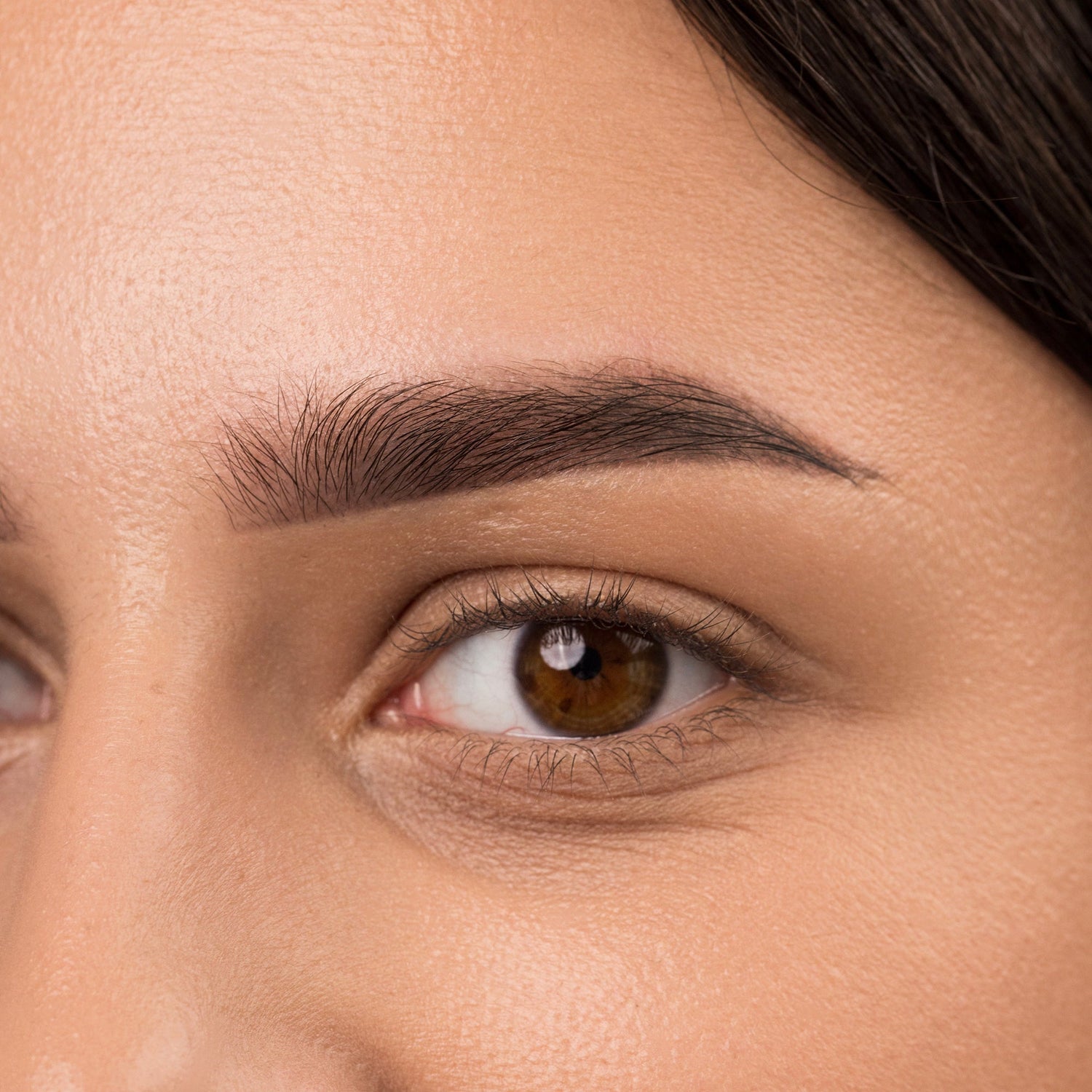
2.8 mm or 3.5 mm — What Does Stroke Length Actually Change in Powder Brows?
One of the most common questions in permanent makeup is which is better for powder brows — 2.8 mm or 3.5 mm.
The answer is more nuanced than choosing one number.
Stroke length influences how long the needle remains in the tissue during each implantation cycle (dwell time). That, in turn, affects how much pigment can be implanted with each individual insertion and, consequently, how colour builds throughout the procedure.
Stroke length alone does not determine whether the result will be softer, darker or better healed.
What Does Stroke Length Actually Change?
With a longer stroke, the needle generally spends slightly more time in the implantation cycle, allowing more pigment to be implanted during a single insertion.
In practical terms, this often means:
- colour builds faster,
- fewer passes may be required,
- implantation can be more efficient.
With a shorter stroke, the amount of pigment implanted per individual insertion is typically lower.
This allows colour to build more gradually and may require additional passes to achieve the same level of saturation.
Neither approach is inherently better. They simply shape how pigment accumulates during the procedure differently.
The choice also depends on the pigment formulation, skin characteristics and the artist's preferred working method.
Does a 3.5 mm Stroke Cause Overpigmentation?
A common misconception: a longer stroke automatically causes overpigmentation.
Stroke length alone does not determine overpigmentation.
Overpigmentation occurs when too much pigment is implanted relative to the tissue's characteristics and the technique used — regardless of the nominal stroke length.
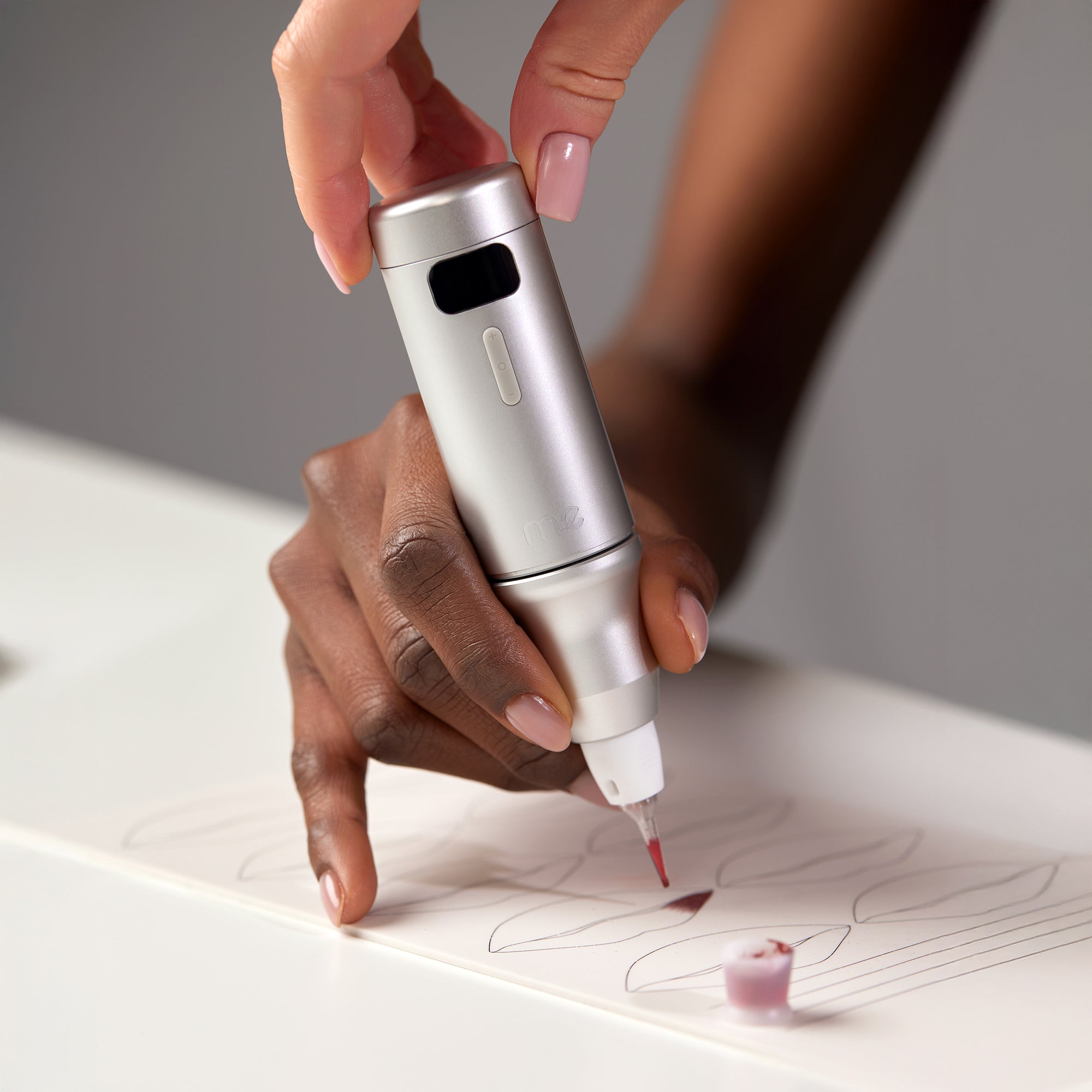
During the development of ME™, one of our engineering objectives was to make both stroke configurations predictable — not simply to change the distance travelled by the needle. This is why both our 2.8 mm and 3.5 mm configurations were developed to provide efficient implantation while maintaining control over colour build-up.
The difference is not that one stroke is "safe" and the other "aggressive."
The difference is how quickly pigment saturation builds during the procedure.
Why Motor Control Matters as Much as Stroke Length
Stroke length is only one part of the implantation system.
Equally important is how consistently the machine performs that movement once the needle encounters resistance.
Many conventional PMU machines use brushed coreless motors operating in an open-loop configuration. These systems continuously deliver the commanded input but do not receive position feedback from the motor itself. As loading conditions change during treatment, the motor cannot verify whether it is reproducing the intended movement with the same precision.
ME™ was developed differently.
Our customised brushless motor operates with Hall sensors in a closed-loop control architecture. The controller continuously receives feedback about the motor's position and adjusts motor control to maintain the intended movement as loading conditions change.
It does not measure skin resistance directly. Instead, it monitors the behaviour of the drive system itself — and because tissue resistance is reflected in how the motor responds to the commanded movement, the system detects that change indirectly and compensates for it by adjusting motor control in real time.
This is one of the reasons why both our 2.8 mm and 3.5 mm stroke configurations can remain highly efficient, without the longer stroke being inherently more traumatic or more prone to overpigmentation.
Choosing Between 2.8 mm and 3.5 mm
For powder brows, the decision isn't simply about choosing a number. Instead, ask yourself:
- How quickly do I want pigment saturation to build?
- How many passes do I prefer to perform?
- Which pigments am I using?
- What type of healed result do I want to achieve?
A 3.5 mm stroke generally builds colour more efficiently with each pass. A 2.8 mm stroke builds colour more gradually, giving the artist finer control over saturation.
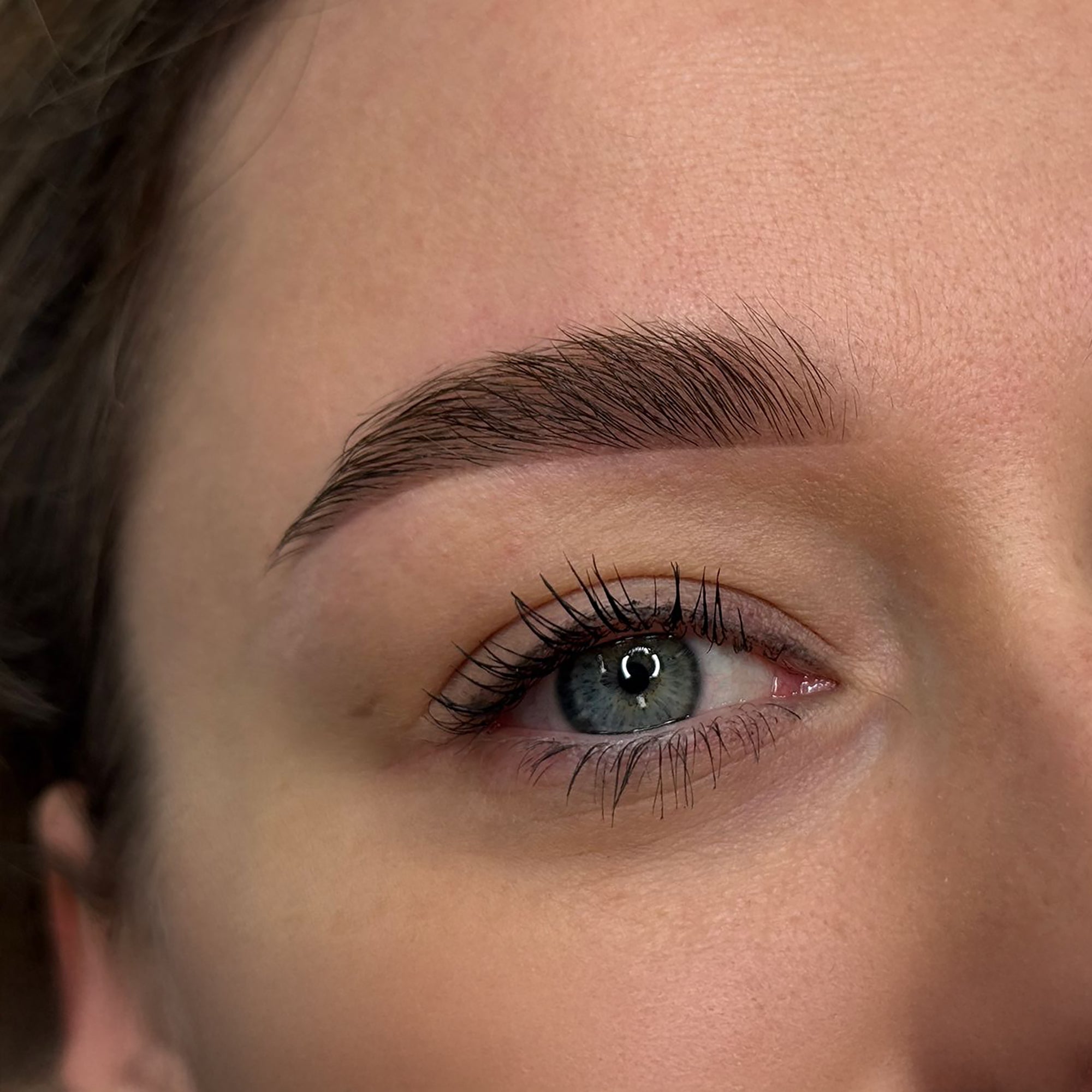
When combined with predictable motor control, both approaches can produce clean pixels, even saturation and excellent healed results.
The goal is not to choose the longest or the shortest stroke.
The goal is to choose the implantation behaviour that best matches your technique and the result you want to create.

Leave a comment
All comments are moderated before being published.
This site is protected by hCaptcha and the hCaptcha Privacy Policy and Terms of Service apply.